
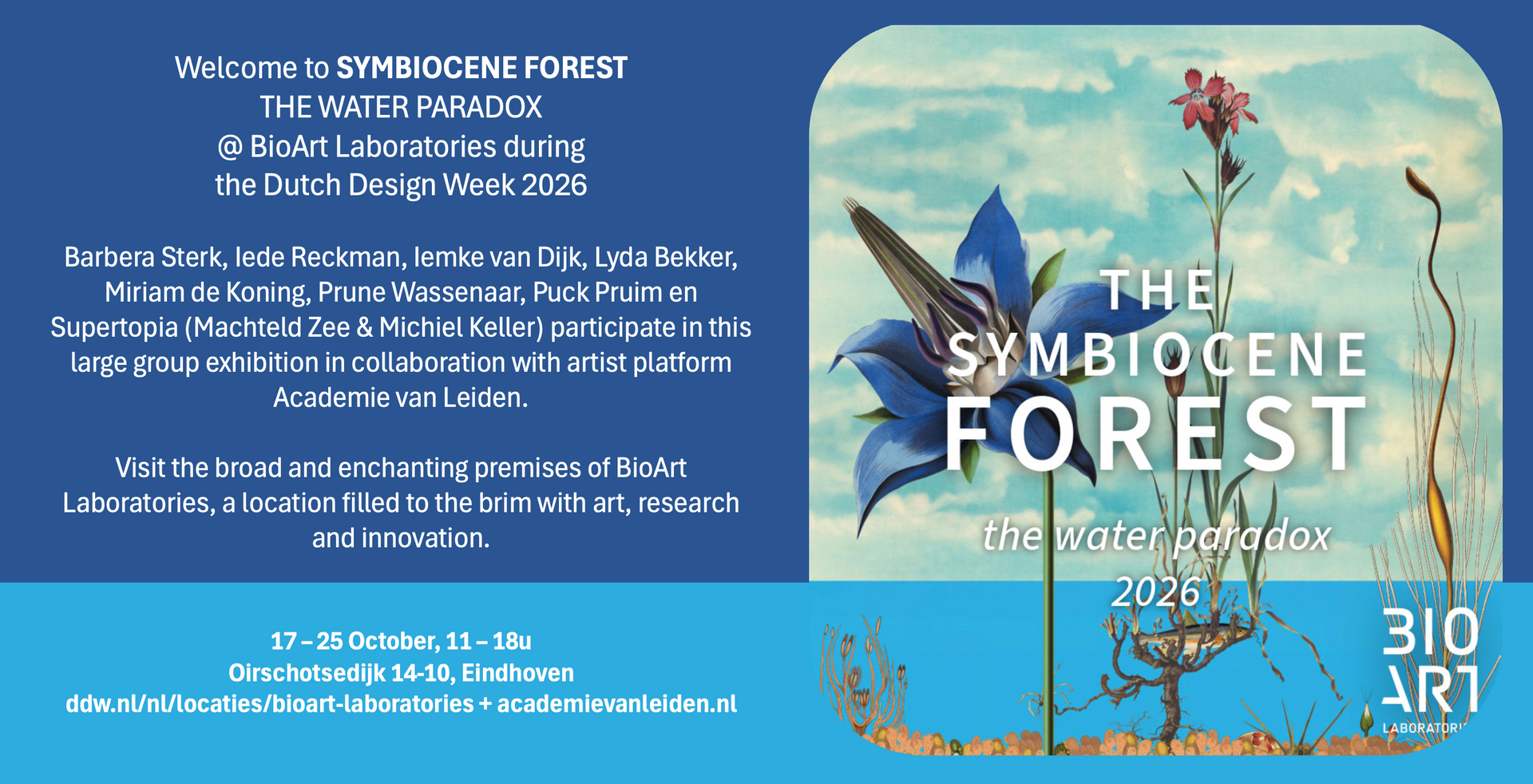
How do artists, designers, and scientists explore and visualize our relationship with water? The answer can be found at the annual group exhibition The Symbiocene Forest, which features the theme "The Water Paradox" this year. In addition to numerous national and international participants, eight artists and initiatives from Leiden (including one from Delft) are showcasing their work through the Academie van Leiden.
From October 17 to October 25, during the Dutch Design Week 2026, BioArt Laboratories focuses on the Water Paradox: water is everywhere and nowhere; in the air, rivers, the sea, and the soil. It is essential for life, yet access to it is becoming increasingly uncertain. Water is thus a source of life, but also of inequality and conflict. The Water Paradox invites us to look beyond the water itself and — through presentations and art — explore interdependence, coexistence, and mutual flourishing.
BioArt Laboratories facilitates the crossover between science, nature, technology, and creativity. These domains are viewed as the foundation for a pioneering, inspiring environment for experimentation and the development of new ideas. BioArt Laboratories was founded in 2011 by researcher and artist Jalila Essaïdi.
Since 2023, the artist platform Academie van Leiden has been collaborating with BioArt Laboratories on this exhibition. The following artists, makers, and designers have joined forces through us this year to showcase their work in Eindhoven:
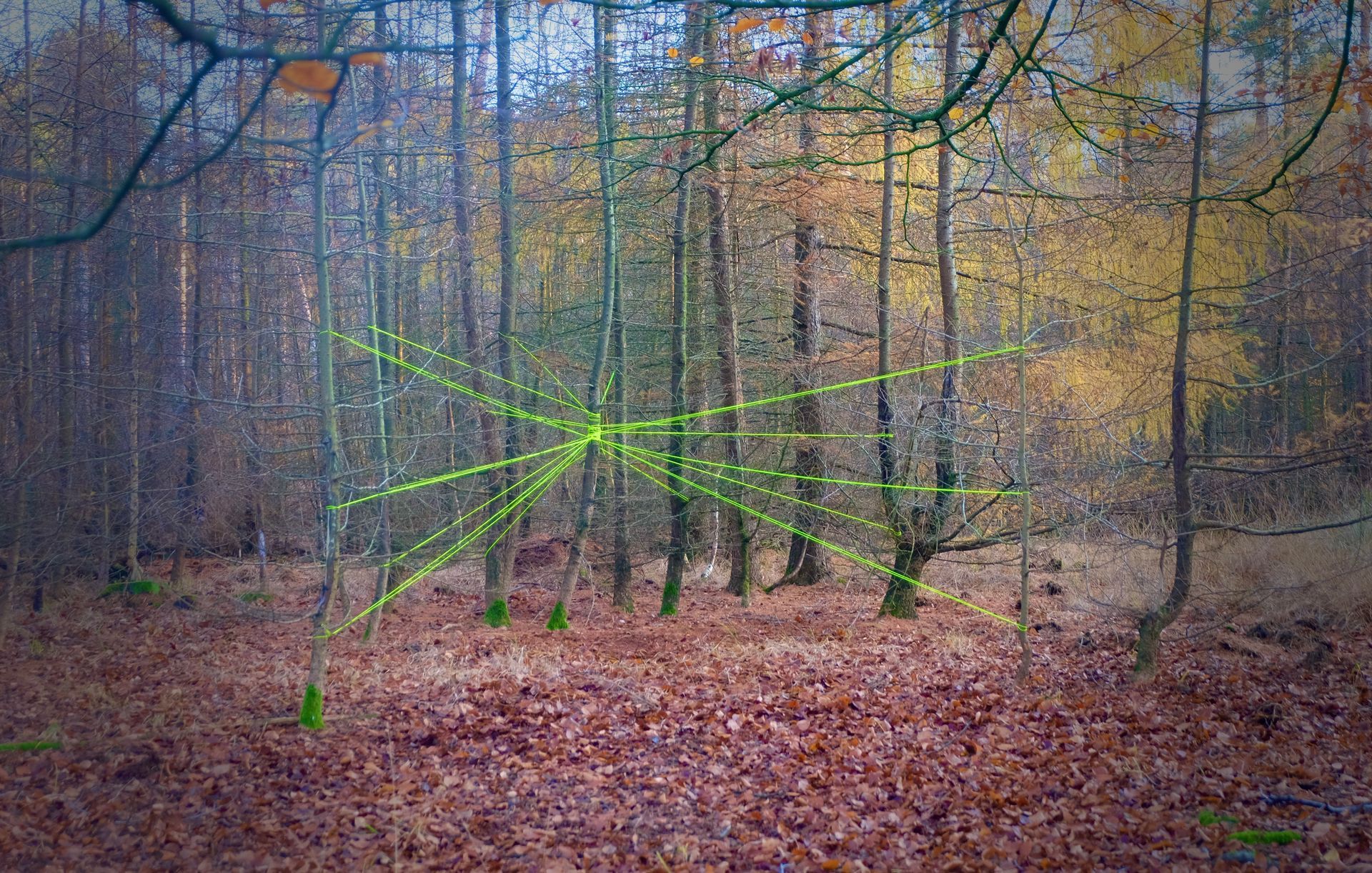
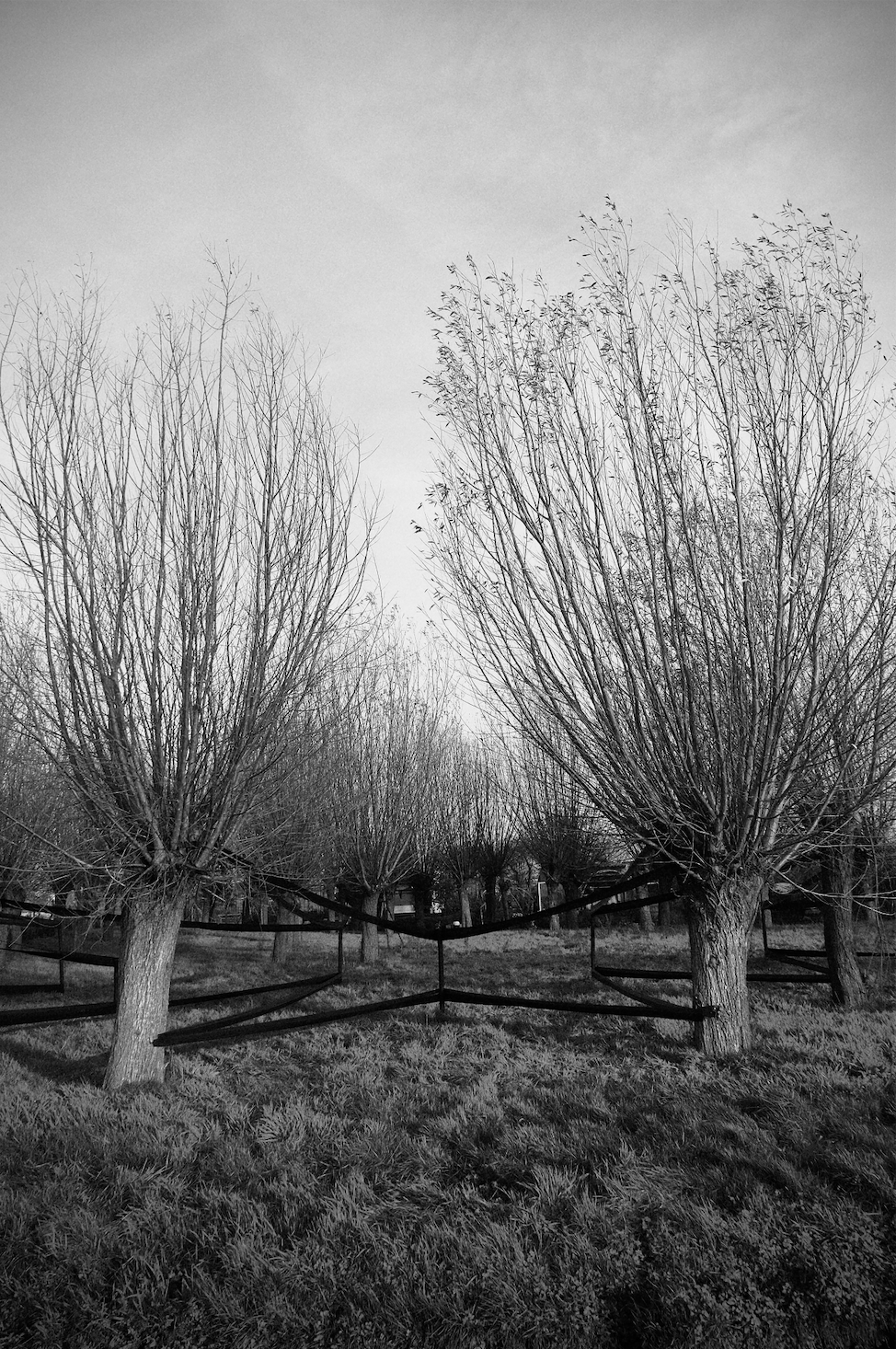
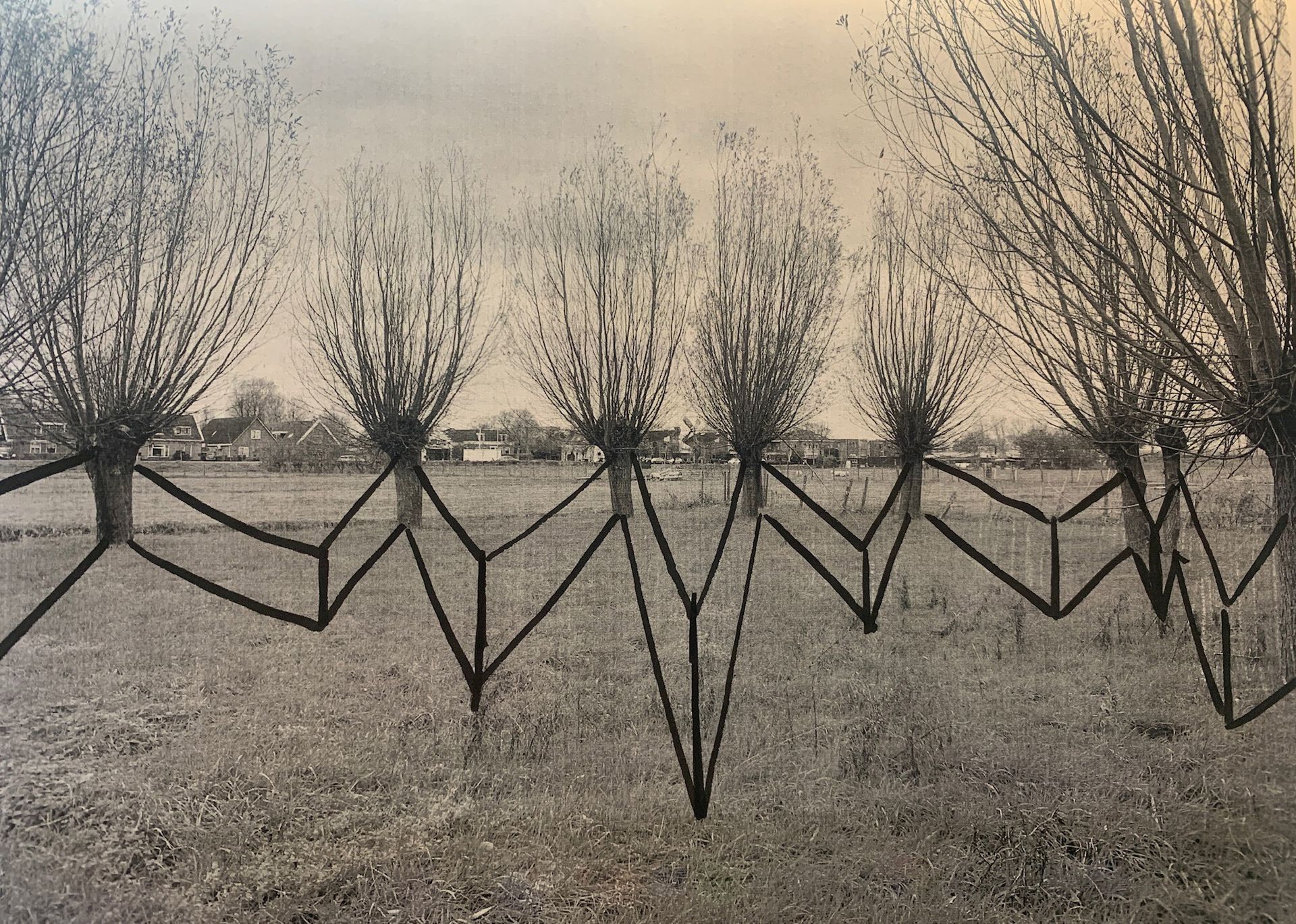
Structured Landscape, Fotocollages
In this installation, I introduce a second human intervention. Not to improve or restore nature, but to question our desire for order and control. Just as the trees were once planted by human hands, my intervention is also a human act. It highlights the paradox between what grows according to its own logic and what is shaped by human intention.
Perhaps the challenge does not lie in intervening again, but in learning to see what already exists. Nature has its own forms of collaboration and interdependence — not as a system that needs to be designed by us, but as a living network of which we are already a part, and from which we still have much to learn.
Iede Reckman
(1981) is a drawing and installation artist whose work is primarily influenced by mathematical and natural phenomena. He graduated from the Royal Academy of Art in The Hague in 2003 and obtained a Master's degree from the Glasgow School of Art in 2013. In 2003, he co-founded the artist collective Billytown in The Hague
Structured Landscape, Fotocollages
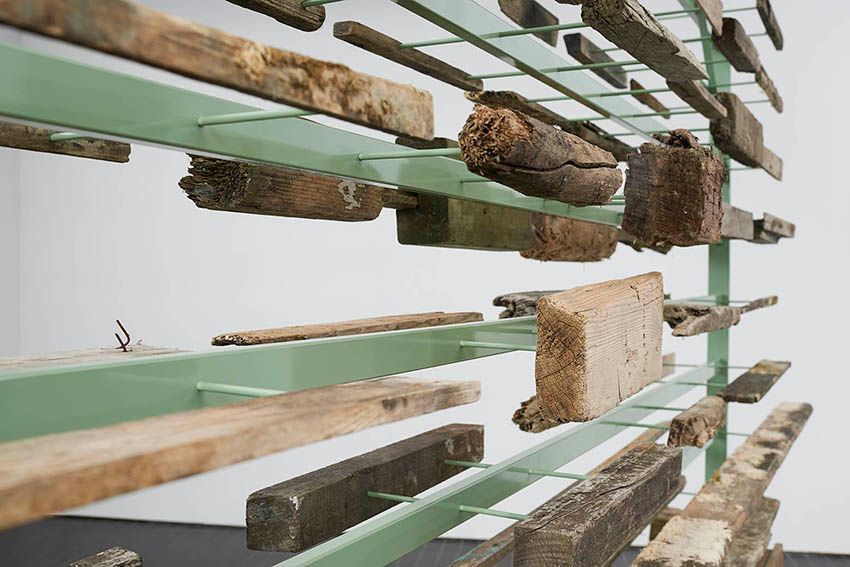
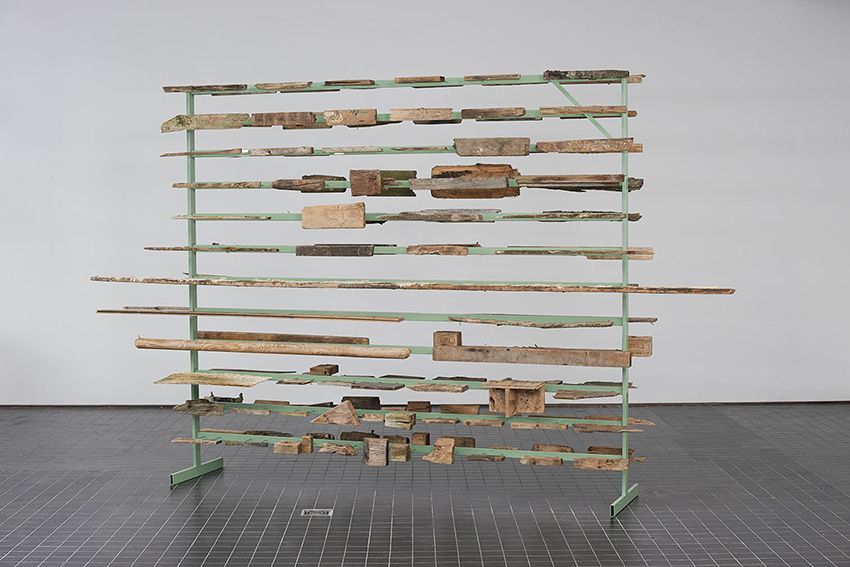
The sculpture Carbon Storied ( 370 x 60 x 225cm / wood (beachcombed at De Houthaven Amsterdam), powder coated steel) is a collection and arrangement of all the wood that Reckman found on the quays of Amsterdam's Houthavens in the summer of 2019.
Until 100 years ago, De Houthavens were filled with tree trunks drifting in the water, but nowadays they are no longer used as timber ports. The little wood that can be found now is waste from broken boats, pallets, crates, and other scrap wood. Each piece of wood has its own story. The title of the work refers to the carbon that wood stores and is slowly released by the decaying of the wood. The wood has been shaped by the water in which it has floated for years. The water has started the decaying processes; peeled off paint, rusted screws and nails, and rotting processes, but also traces of organisms living in the water.
Photography: Jhoeko
Iemke van Dijk
(1969) is an artist who lives and works in Leiden, where she initiated EST art foundation. Van Dijk completed her studies at the St. Joost Academy in Breda and an internship in Paris at the La Courière et Frelaut studio. She teaches at Leiden University (LAK).
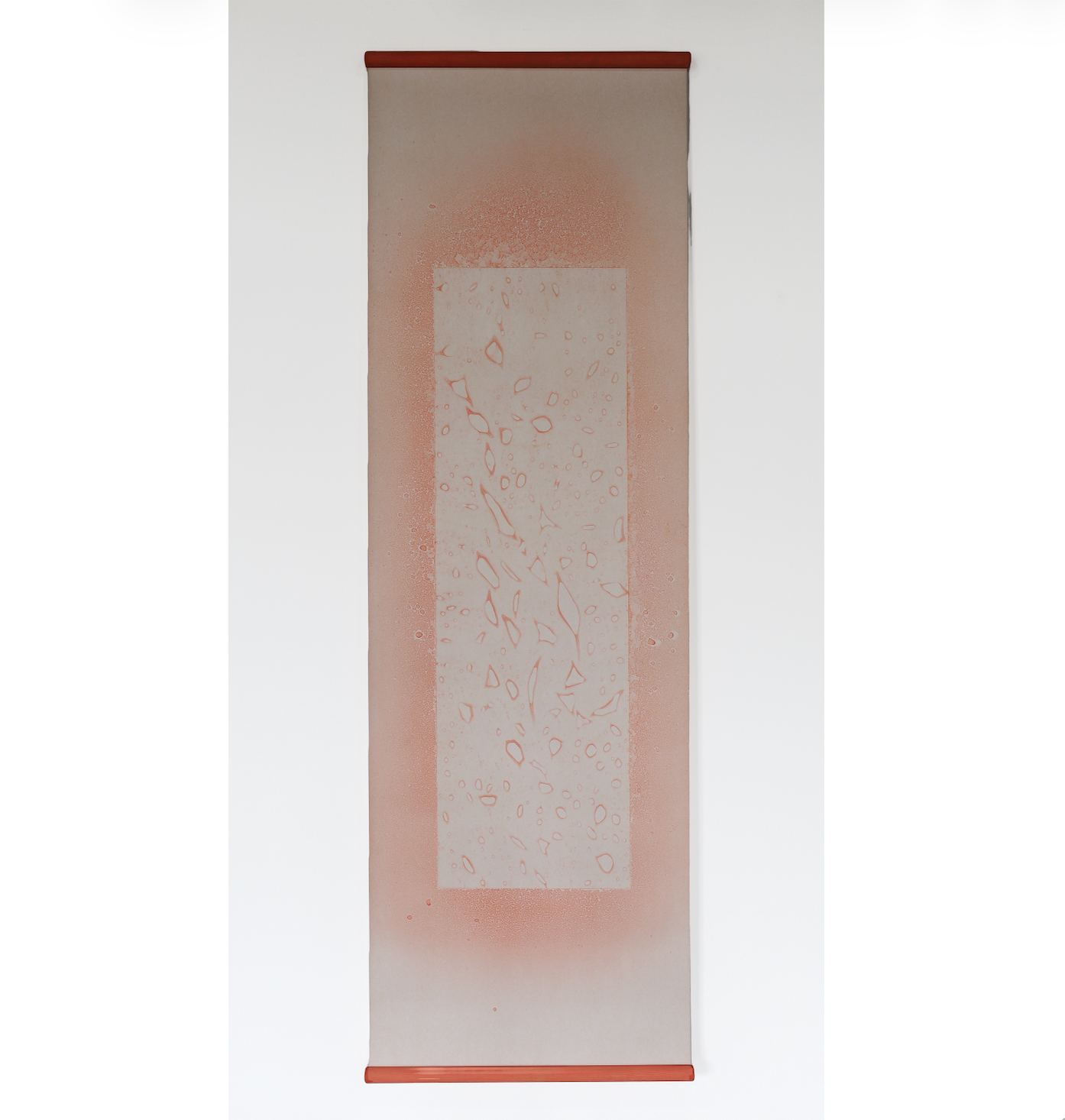
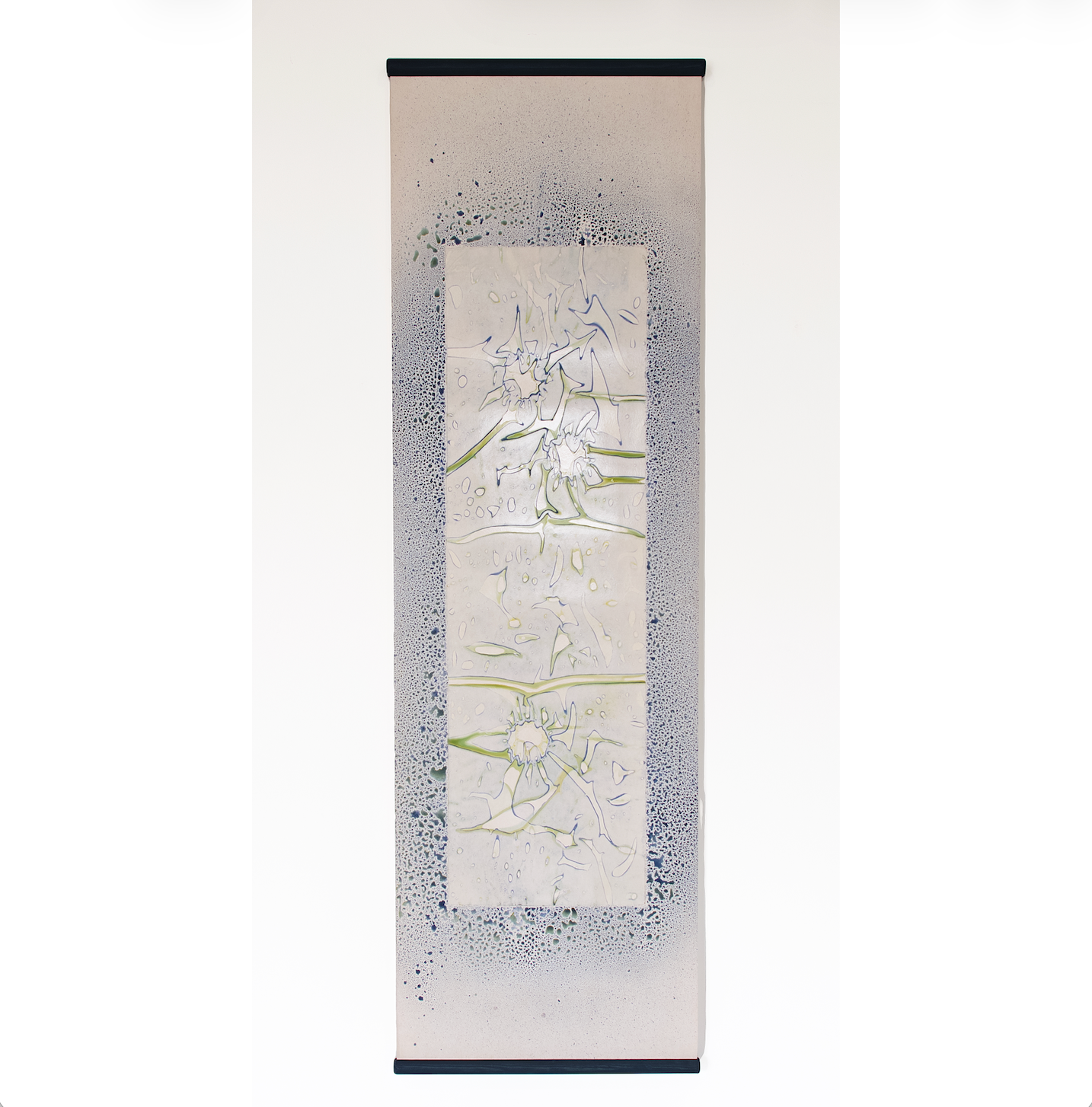
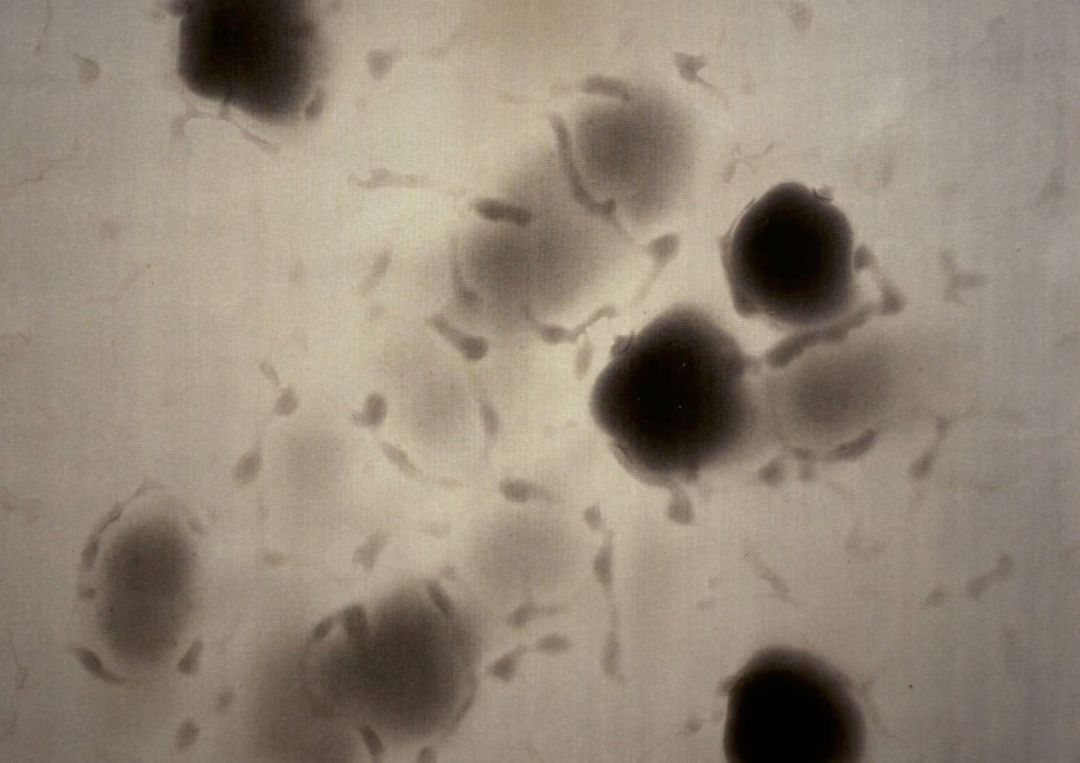
Two watercolors (No Title) and a detail of the video ‘Drops’
Van Dijk constructs a creative process in which chance plays a significant role. She uses a variety of materials, such as porcelain for floor installations, graphite for wall drawings, and watercolor on paper. The result is visual work that is both geometric and organic. Regarding The Water Paradox, three works have been selected that showcase the beauty of water’s properties.
Lyda Bekker (1961) is co-founder of the platform Academie van Leiden. She studied fine arts and printmaking at Gerrit Rietveld Academie and School of Visual Arts (NYC). In addition she is teaching at LAK (Leiden University.
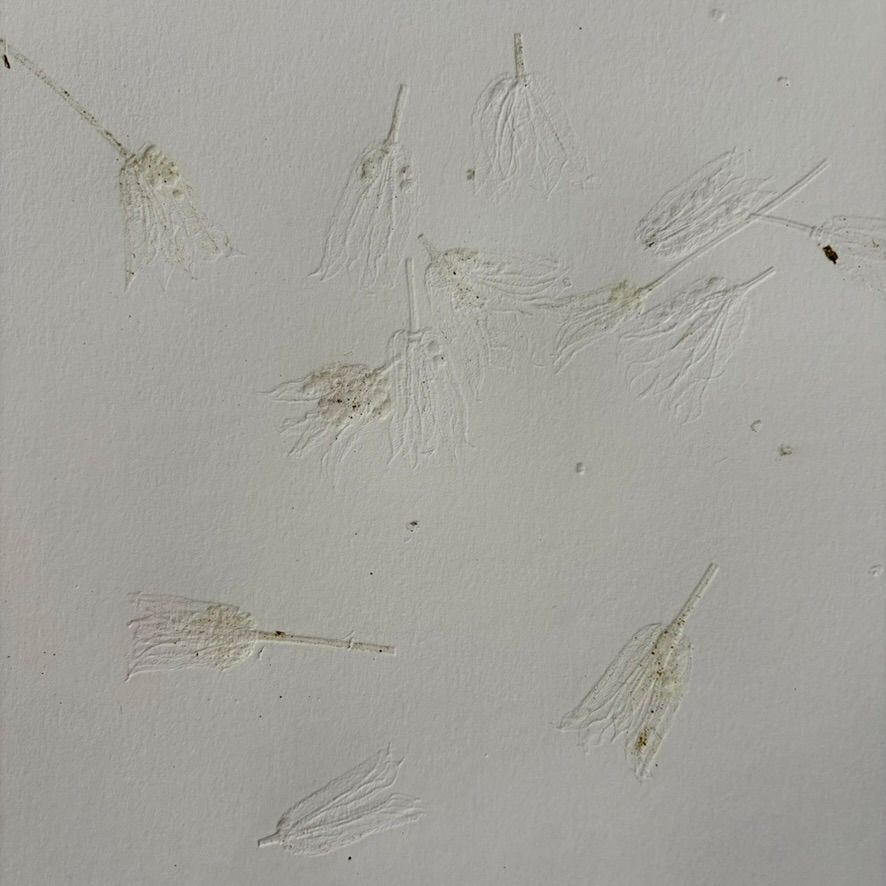
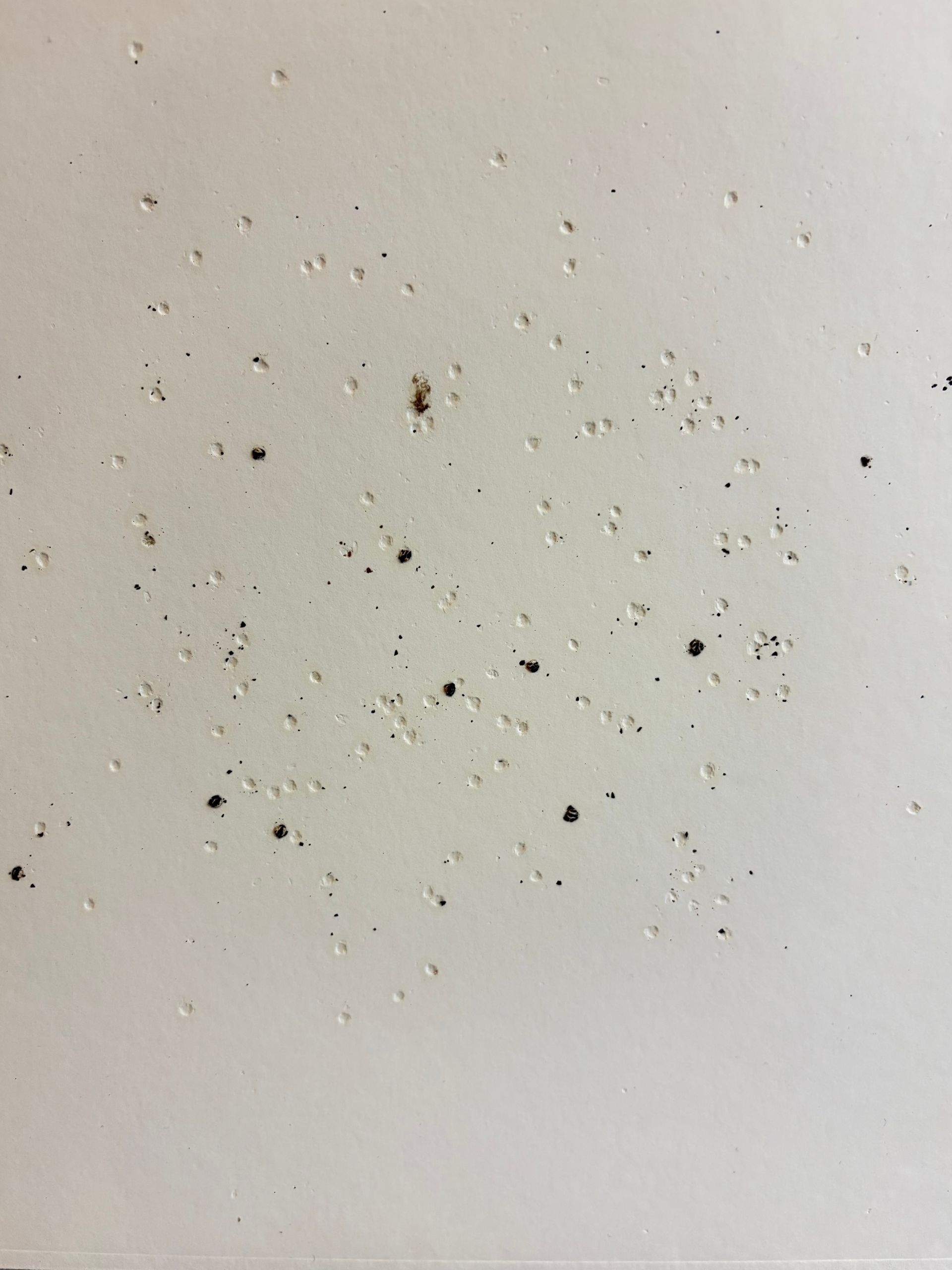
This is an investigation/research into botanical relief printing and eco-prints using seeds and seed pods from the private garden, including Columbine, Marigold and Dove’s Foot. Rhythm, patterns and structures emerge through chance and choice. The work shows how water leaves traces through growth and drought.
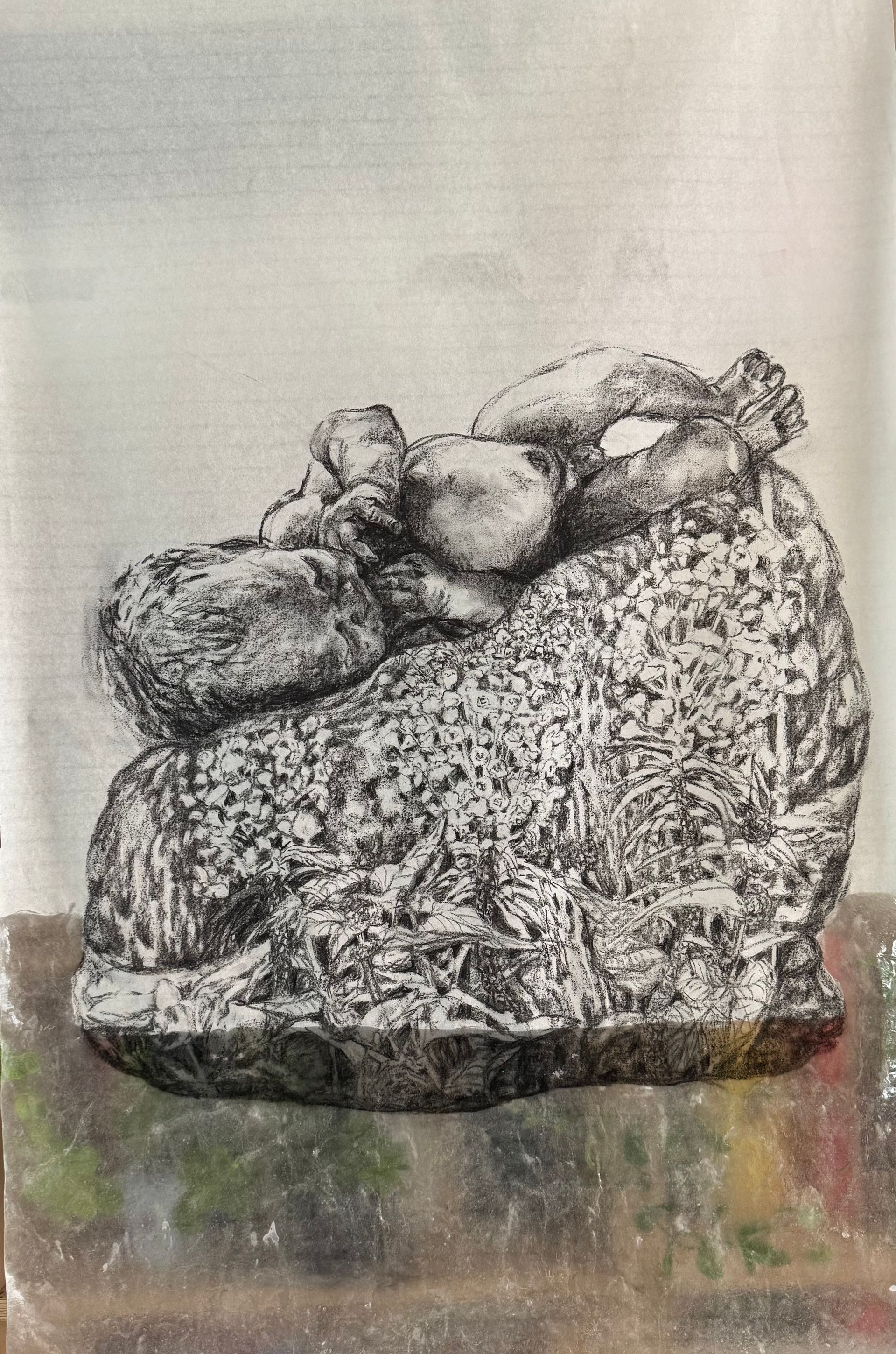
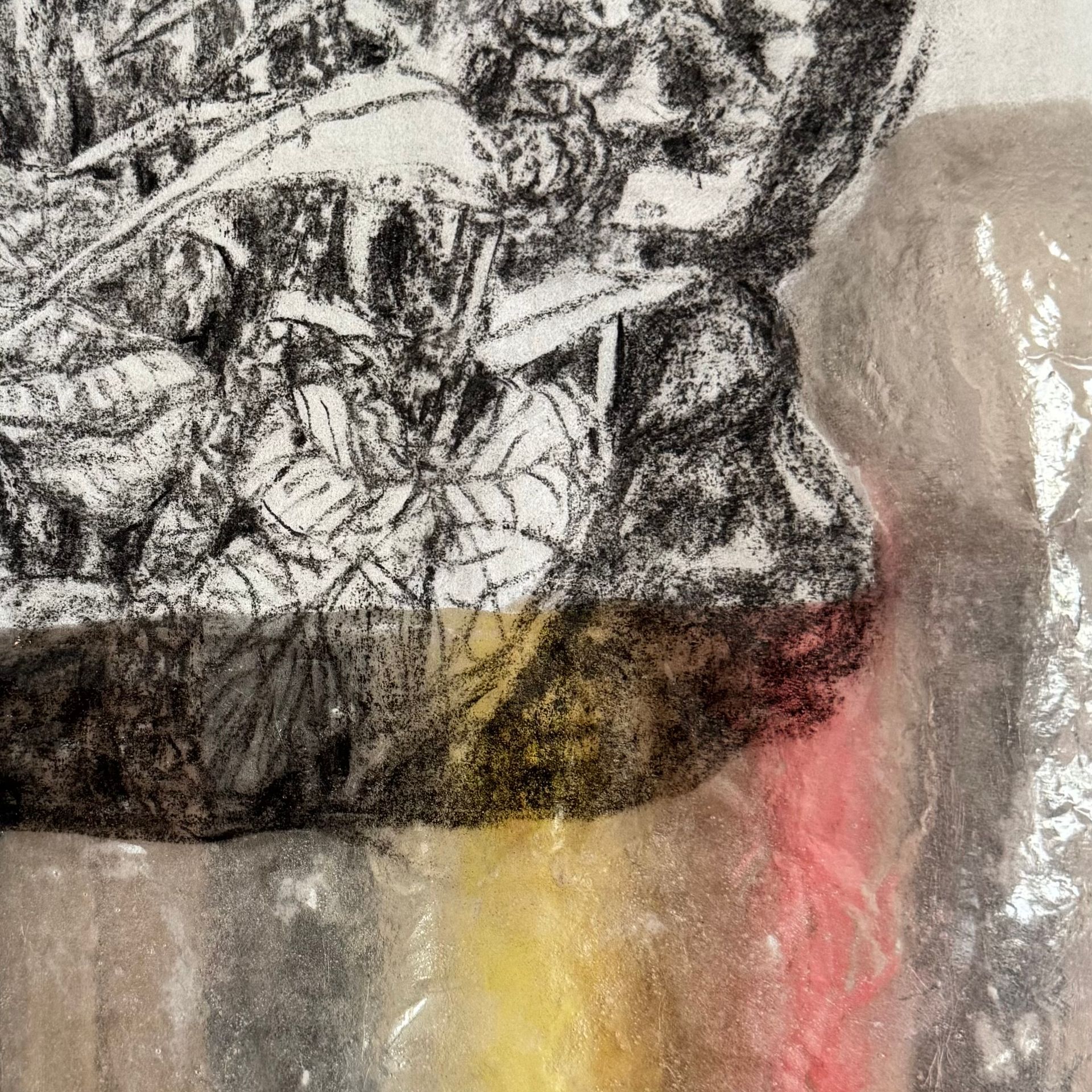
Petrichor Lullaby (2026) Charcoal on Ricepaper, Waterbased Glue, 100 x 60 cm
Water is soft, invigorating. Water cleans, grinds out, dissolves, evaporates.
Scientists Isabel Joy Bear and Richard Thomas describe the distinct scent that is released when rain has fallen after a long period of drought in a new word, a combination of the Greek words petra (stone) and ichor (blood of the gods).
We experience how the oils that are produced by plants during dry periods, and which have accumulated in the soil and on rocks, are released into the air after a rainstorm.
Prune Wassenaar is a recent graduate of the Faculty of Architecture at TU Delft. She is interested in design approaches that consider the life cycle of existing materials, ranging from renovation and transformation to individual material reuse.
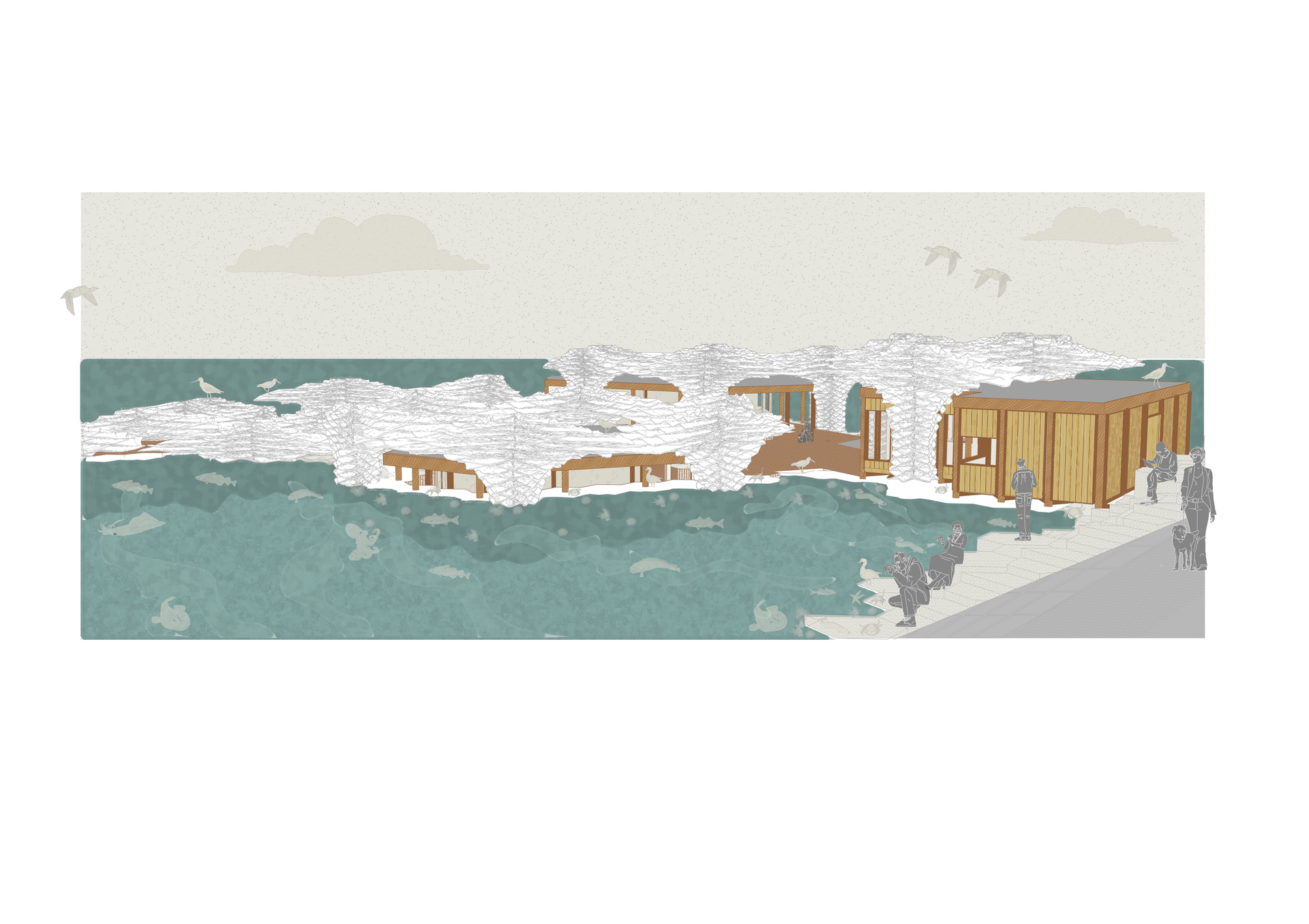
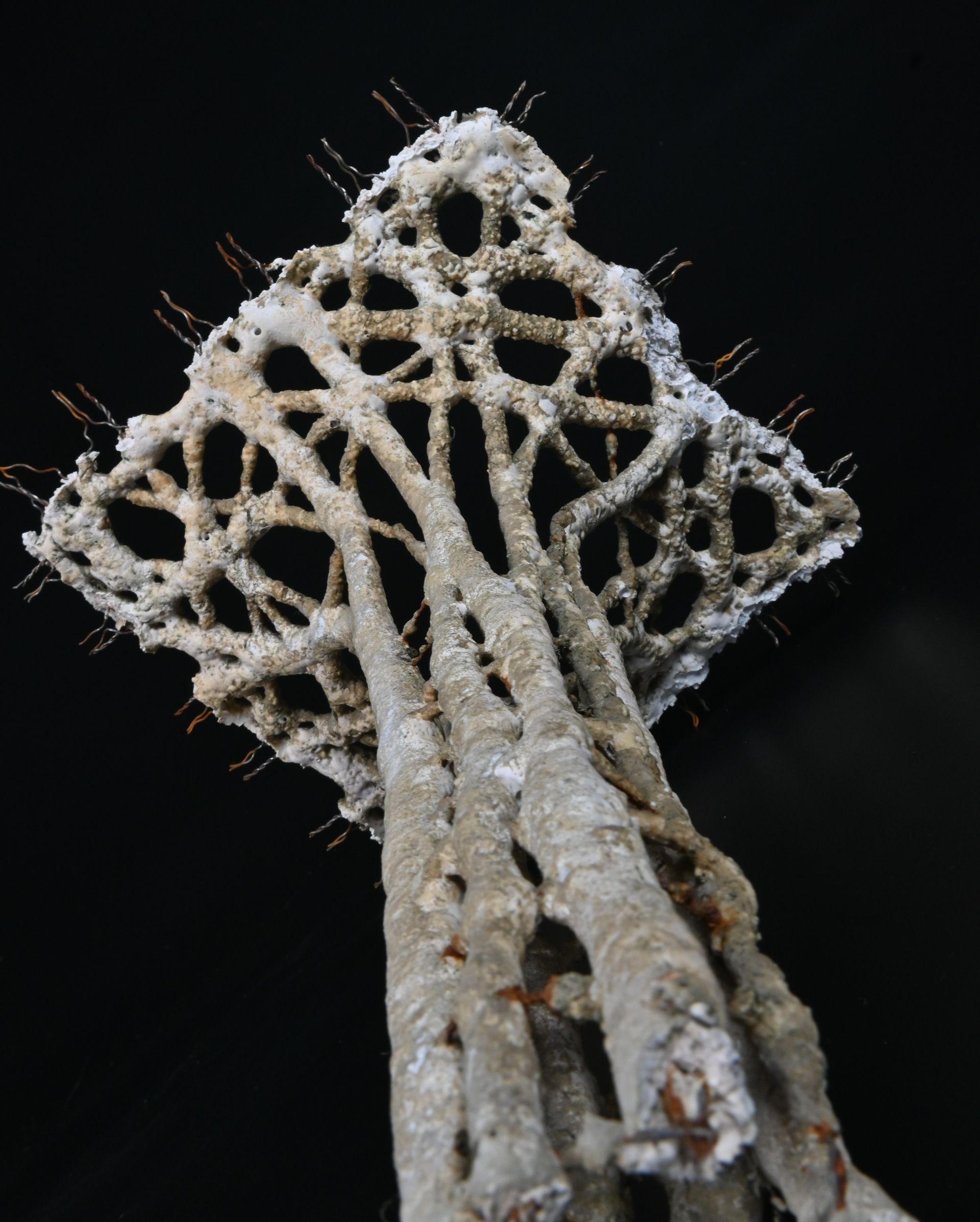
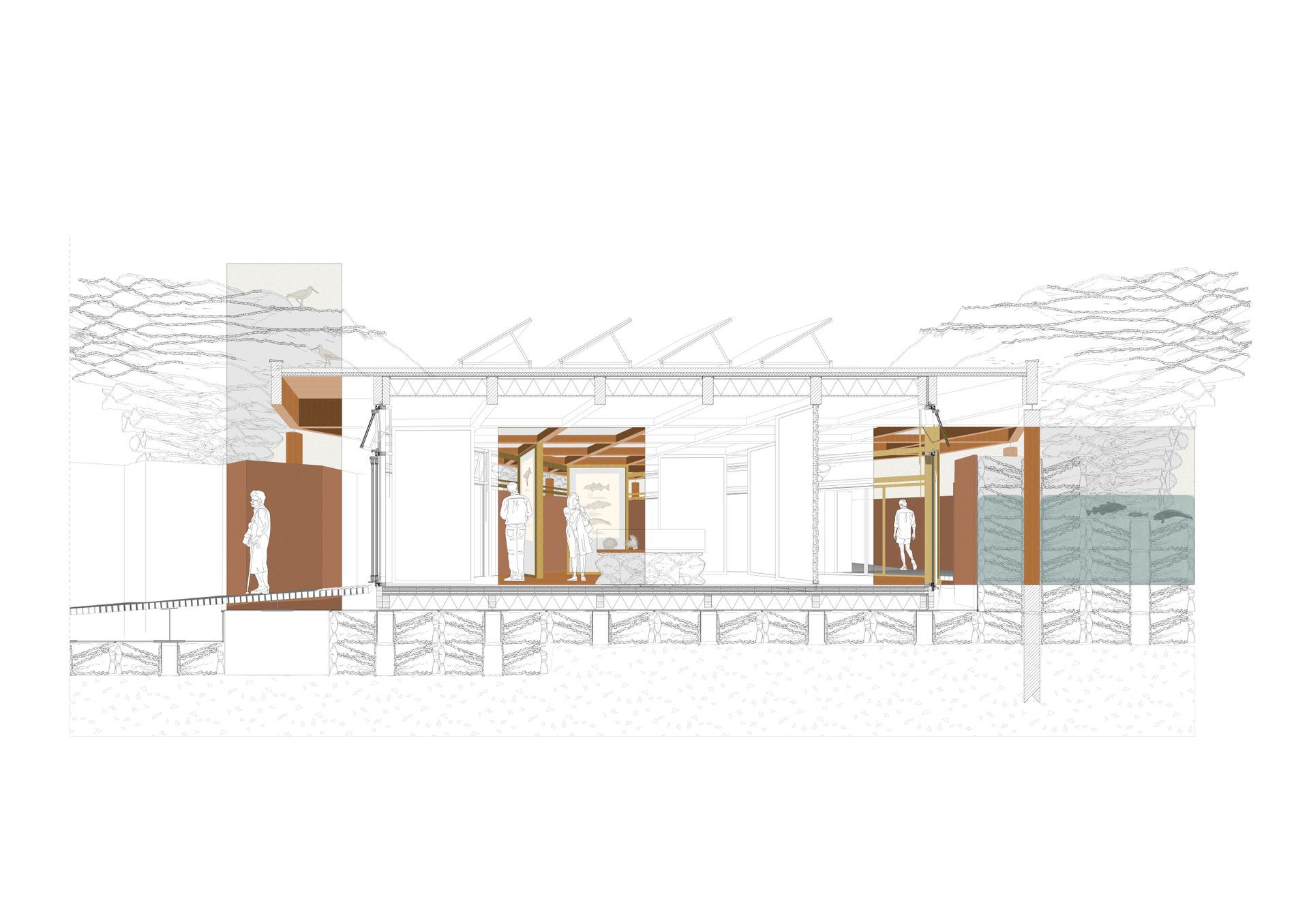
Ôde à la Mer is the result of my graduation project, which I had the opportunity to conceive, initiate, and organize independently with the support of the faculty. To me Architecture can be understood as the practice of bringing together the different pieces of a complex puzzle to create meaningful living environments. Its aim is to respond to the needs of future users by integrating knowledge, expertise, and perspectives from multiple disciplines.
In this project, material became the central piece of that puzzle. Biorock, an innovative material with potential applications in the construction sector, formed the starting point of both the research and the architectural design. Produced through an electrochemical process in seawater, Biorock grows a layer of calcium carbonate on a lightweight steel structure using only a small electrical current. Its minimal demand for lightweight steel structure using only a small electrical current. Its minimal demand for lightweight steel structure using only a small electrical current. Its minimal demand for energy and raw materials makes it a promising material for more sustainable forms of construction.
Ôde à la Mer investigates the potential of Biorock as a starting point for future-proof architecture. By integrating ecological processes into the built environment, the project tries to bridge the gap between human and marine ecosystems and explore new ways of designing with, rather than against, nature.
Puck Pruim
(2003) is a graphic design student at KABK, exploring the importance of community and care through a broader range of practices such as artistic research, performance, painting, and bookmaking.
Insta
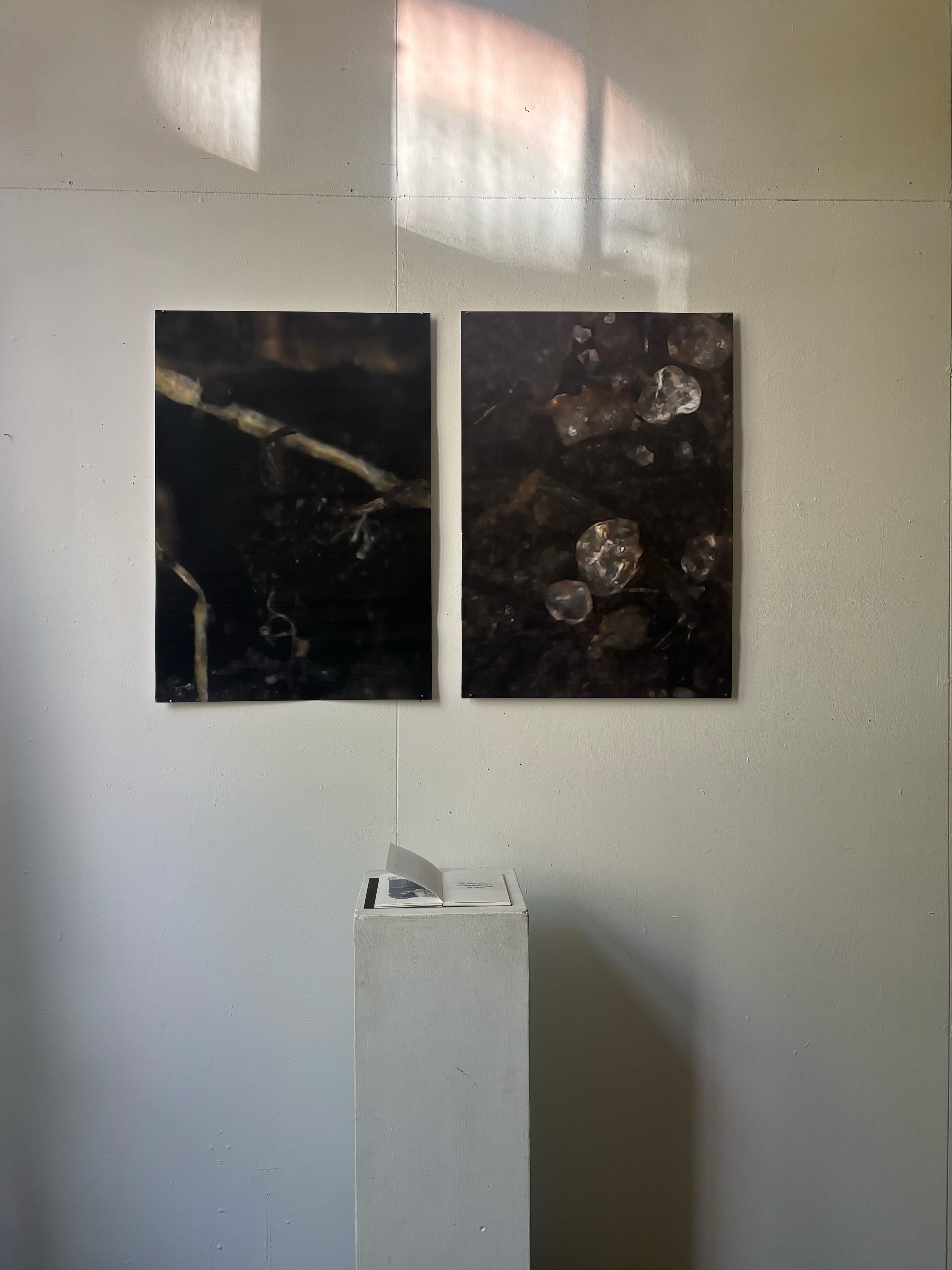

Soil in Waiting (Two A1 prints and one book)
Beneath the urban landscape lies an entire world we have stopped paying attention to. It has been paved over, fenced off, and managed by distant hands. Soil ecosystems are treated as a resource to exploit rather than a community to belong to: extracted from, built upon, and disrupted by centuries of colonial and industrial logic that never asked what it was taking.
This project explores how composting as a conscious urban practice can bridge that human-soil disconnection. Engaging in a form of refusal by physically pulling organic matter out of the disposal chain and returning it to where it belongs. It is soil in waiting, holding water efficiently so that what grows in it can thrive and survive without constant intervention. In this way composting becomes more than just rescuing waste from landfill; it becomes a tangible act of care, reducing how much irrigation gardens and plantations need while mending what centuries of extraction pulled apart.
It’s a reminder that we are not separate from the living world beneath us, however deep we have buried it.
Supertopia (Machteld Zee & Michiel Keller) Machteld Zee and Michiel Keller are founders of Supertopia, a foundation focused on creating art+science projects. Michiel is an audio- and filmmaker and Machteld is a multidisciplinary artist.
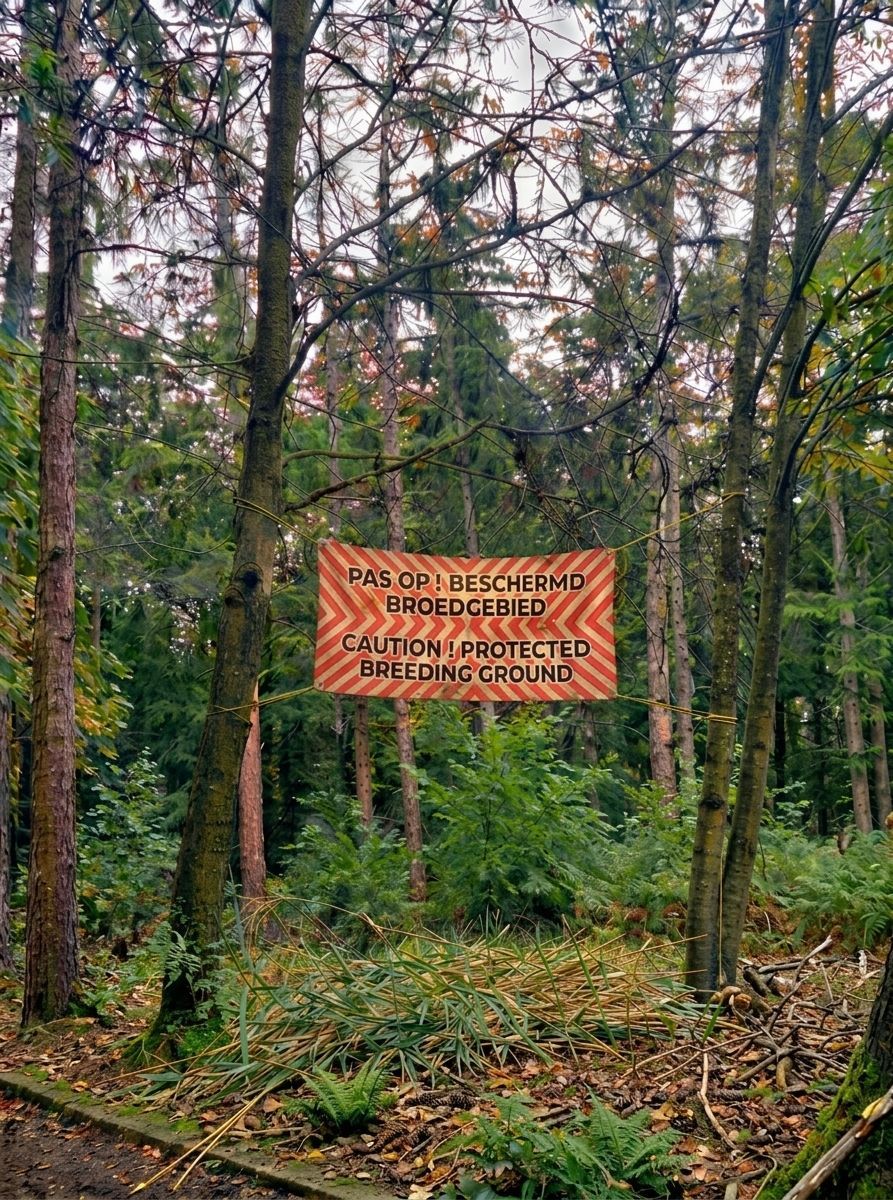
Whippomorpha: protected breeding area for a reverse evolution. The audio installation and speculative bio-art project *Whippomorpha* moves between science, speculation, and art.
Sound makes the unseen research present and the hidden aquatic world audible. Visitors do not enter an exhibition space, but rather a research area where the presence of an unknown organism is perceptible only indirectly.